
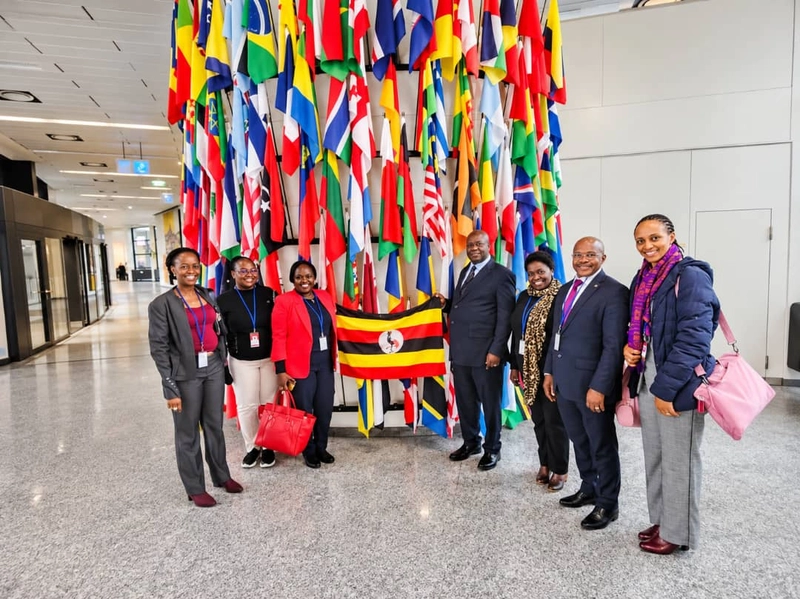
IG Participates In Uncac Review Meeting In Vienna To Strengthen Anti-Corruption Frameworks And Asset Recovery.
Nov. 5, 2026
The Inspectorate of Government (IG) is participating in the Second Resumed 17th Session of the United Nations Convention against Corruption (UNCAC) Implementation Review Group, taking place at the Vienna International Centre in Austria.
The IG is represented by the Director Legal Affairs, Ms. Hilda Talibba, as part of the Ugandan delegation led by the Permanent Secretary of the Directorate for Ethics and Integrity, Mr. Dunstan Balaba. The delegation also comprises representatives from the Financial Intelligence Authority, Office of the Auditor General, Anti-Corruption Division of the High Court, Directorate for Ethics and Integrity, Attorney General's Chambers, Leadership Code Tribunal and the Ministry of Foreign Affairs.
The meeting is discussing the self-assessment checklist for the second phase of the UNCAC Implementation Review Mechanism, alongside the revised model schedule and simplified blueprint. These tools will guide the second-phase assessment of State Parties' implementation of the Convention, which is expected to commence in mid-2027.
Participants are also continuing discussions on the implementation of Chapter V of UNCAC on asset recovery and related cross-cutting provisions under Chapter II on preventive measures. The discussions are examining challenges, good practices and observations reported by State Parties.
Among the key good practices highlighted is the importance of following the money, the individuals involved and their networks during financial investigations to facilitate the identification and recovery of assets. Participants also emphasised the need for strong cooperation between anti-corruption agencies and Financial Intelligence Units (FIUs), including timely and spontaneous information sharing and properly formulated requests to provide valuable leads for investigations.
The meeting further underscored the importance of conducting parallel financial investigations as a standard practice in corruption cases, supported by clear institutional mandates, legally authorised mechanisms and practical cooperation arrangements such as memoranda of understanding and joint task forces.
Other good practices highlighted include modernised asset declaration, verification and reporting systems; the establishment of beneficial ownership registries; information sharing among anti-corruption agencies; and enhanced inter-agency, regional and international cooperation to combat money laundering.
However, participants noted persistent challenges across many countries, including weak or non-existent verification mechanisms, limited asset disclosures, inadequate definitions of conflict of interest and insufficient information on beneficial ownership. Gaps were also identified in reporting by professional service providers, particularly in the legal, real estate and company services sectors. This issue is expected to be presented to the UNCAC Conference of State Parties for consideration and resolution.
Meanwhile, Andorra has recently joined UNCAC, bringing the total number of State Parties to 193, further demonstrating the Convention's growing global reach and commitment to international cooperation against corruption.